
The Limits of Knowing Another Person
To the LighthouseThe novel tests the desire to understand others against the partial, shifting impressions through which people actually know one another.
increasing Bearing strength in each event
 decreasing
Bearing strength in each eventdecreasingLily’s Questions
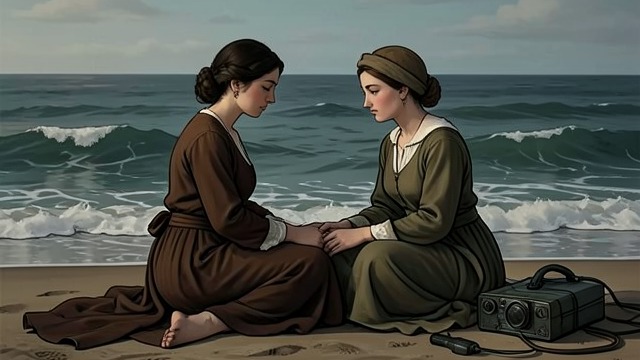
The Desire for Intimacy
Inquiry
Lily wonders what Mrs Ramsay knows and whether affection might let one enter another person’s private mind. She longs for unity rather than information alone.
Boundary
Nothing happens that grants complete access. Their closeness matters, but Mrs Ramsay remains partly unknowable.
Conflicting Portraits
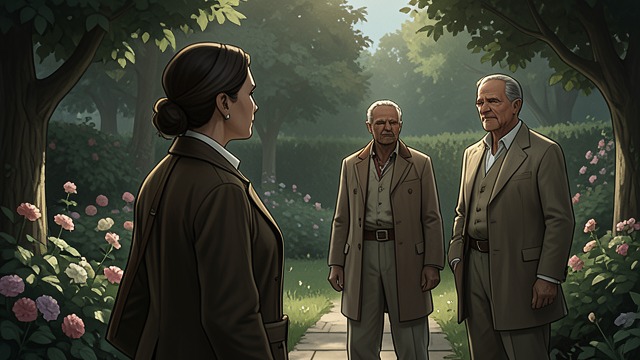
Contradictory Impressions
Judgment
Lily considers Bankes’s goodness and restraint alongside his habits and irritations. She also sees Mr Ramsay as both egotistical and loving.
Instability
No single list of qualities captures either man. Her perceptions change according to the moment and the person observing.
Silence Beside Mrs Ramsay
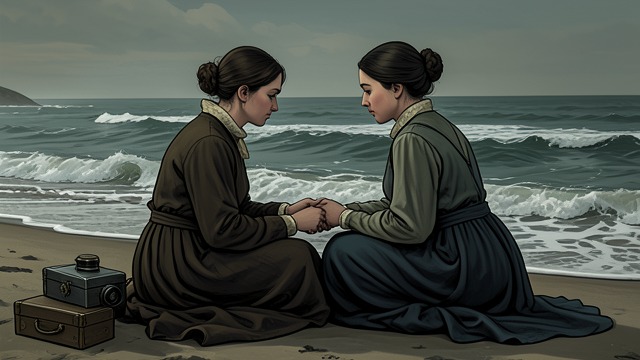
Understanding Without Words
Quiet
Lily recalls sitting with Mrs Ramsay by the shore without needing to explain everything. Silence seems to hold their companionship more fully than conversation might.
Uncertainty
Lily cannot prove what Mrs Ramsay felt or understood. The moment offers intimacy without turning it into complete knowledge.
Lily’s Imagined Rayleys
Stories Made from Fragments
Invention
Lily constructs scenes about Paul and Minta from scraps of information. She recognizes that her account may be imaginative rather than factual.
Affection
Even invented scenes become part of how she thinks about them. Knowing someone involves interpretation as well as observation.
The Unexplained Canvas
Meaning Without Explanation
Work
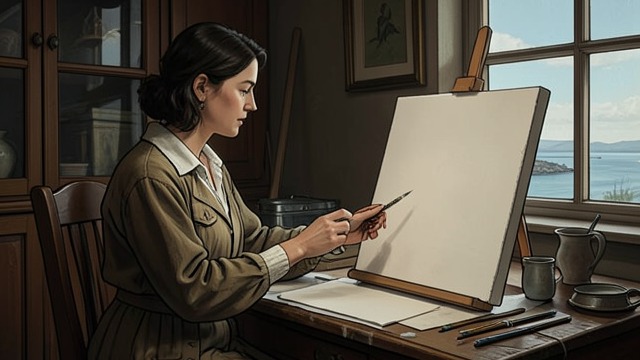
Lily’s painting gives form to what she has seen and felt without spelling it out in words. Its arrangement remains open to interpretation.
Resolution
She finishes without claiming that the canvas explains life or other people. Art provides a shaped response to mystery, not a complete solution.
the first evening as Lily sits near Mrs Ramsay
during Lily’s conversation with William Bankes
during the remembered beach scene years later
during the morning of Lily’s return
at the completion of Lily’s painting
